


To raise a generation of teenagers who can take charge of their own lives, act responsibly, and actively contribute to positive change in society.
25 October
School of Resilience
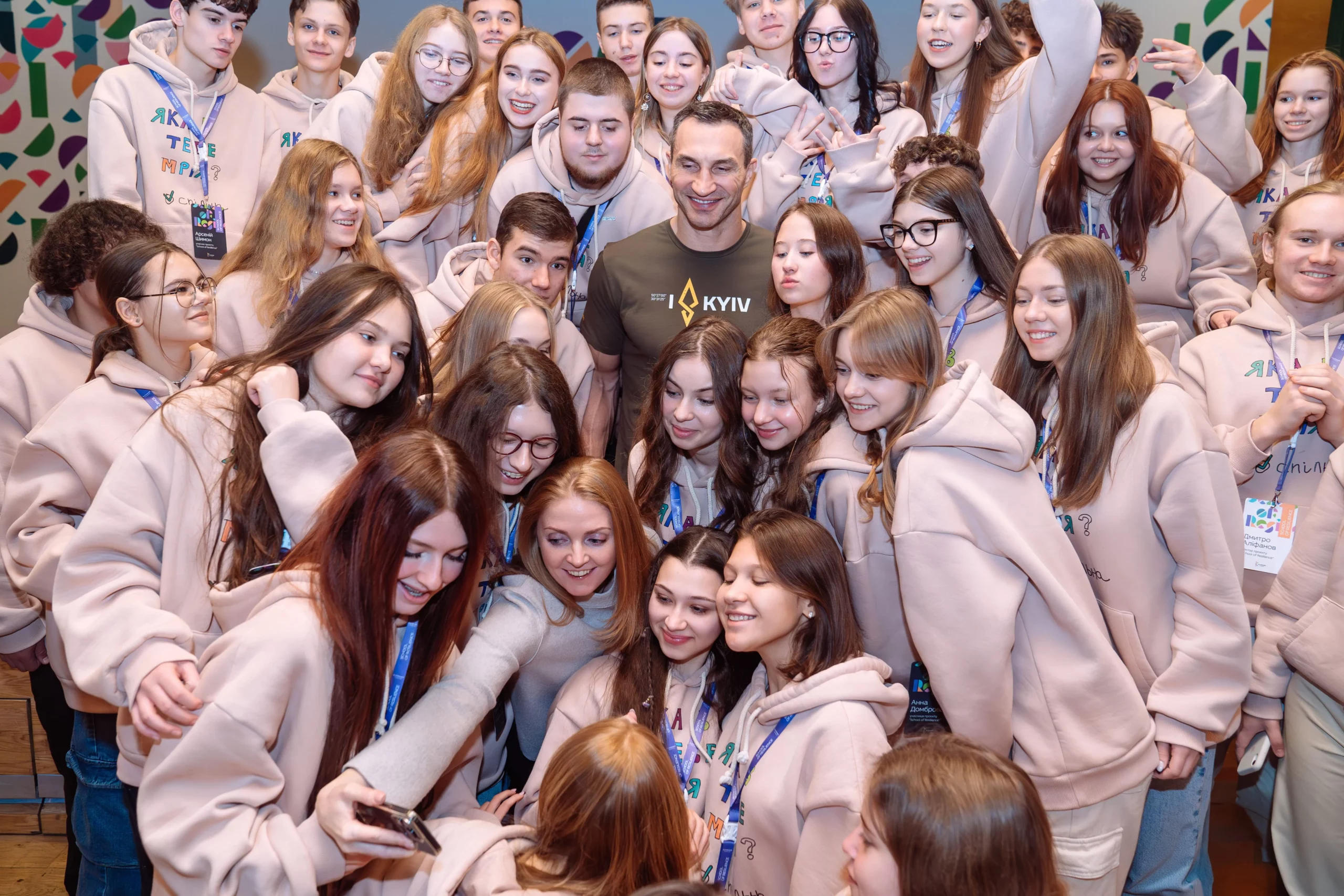
School of Resilience is a personal development program for young people who want to build their future with confidence.
 25 October
Context
Uncertainty, unclear prospects, and limited opportunities for self-realization in Ukraine all make it harder for young people to develop an active, responsible stance.
School of Resilience responds to these challenges. The project helps teenagers understand themselves better and recognize their own values and their role in society. It teaches them to think critically, communicate effectively, generate ideas, and bring their own initiatives to life, building their personal, civic, and professional capacity.
Mission
- 60 Teenagers
Age: 14–16
Selection takes gender and regional balance into account.
Offline project
Throughout the project, participants will take part in a series of hands-on and educational sessions focused on developing critical thinking, communication skills, an understanding of their rights, a responsible approach to personal finances, and the ability to work with ideas and bring them to life. Special attention will be given to how young people can shape change around them and get involved in the life of their community, as well as to exploring their strengths, interests, and possible paths for further growth.
All activities combine practical learning, teamwork, discussions, reflection, and engagement with experts. Psychological support remains a key part of the program, helping teenagers better understand themselves, their strengths, emotions, and needs, and build self-confidence and skills for connecting with others.
Local projects
After the offline part of the project, participants are expected to carry out a project in their community, town, or village.
Once the main program ends, participants will work on their own local projects aimed at creating positive change in their communities.
This stage will serve as a practical continuation of School of Resilience and give participants the chance to apply what they have learned: identify a real need in their community, shape an idea, plan how to carry it out, and bring their own initiative to life.
{"description":"Applications open","dateFrom":"2026-10-05T00:00:00+00:00","dateTo":"2026-10-25T00:00:00+00:00","color":"5aff28","fromMonthTranslated":"October","toMonthTranslated":"October"}
{"description":"Results: Session I","dateFrom":"2026-10-31T00:00:00+00:00","dateTo":"2026-11-01T00:00:00+00:00","color":"8700ff","fromMonthTranslated":"October","toMonthTranslated":"November"}
{"description":"Results: Session II","dateFrom":"2026-11-06T00:00:00+00:00","dateTo":"2026-11-07T00:00:00+00:00","color":"dd9933","fromMonthTranslated":"November","toMonthTranslated":"November"}
{"description":"Session I","dateFrom":"2026-11-13T00:00:00+00:00","dateTo":"2026-11-20T00:00:00+00:00","color":"eeee22","fromMonthTranslated":"November","toMonthTranslated":"November"}
{"description":"Session II","dateFrom":"2026-11-22T00:00:00+00:00","dateTo":"2026-11-29T00:00:00+00:00","color":"1e73be","fromMonthTranslated":"November","toMonthTranslated":"November"}


Фотозвіт за ―
 Young Change Leaders: Why is our future in the hands of teenagers?
22 October 2026
·
5 minutes of reading